


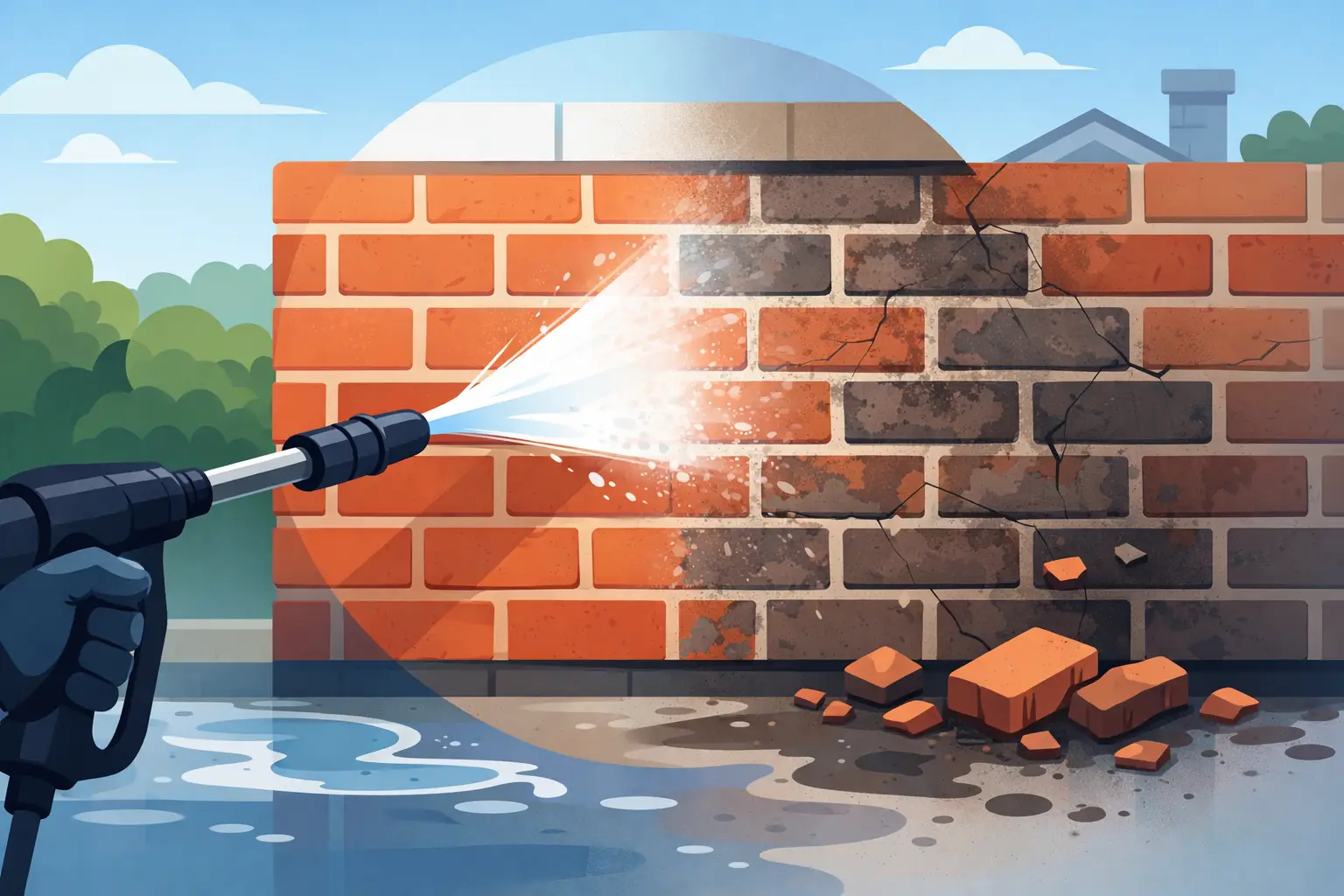
Charleston brick can hold years of algae, mildew, soot, and coastal grime, especially on shaded walls, chimneys, patios, and entryways. But can pressure washing damage brick? Yes. A cleaning method that works well on concrete can permanently harm brick or mortar when the pressure, nozzle, cleaner, or technique is wrong.
Brick cleaning should restore the surface without stripping its protective outer layer or opening weak mortar joints. The right approach depends on the brick’s age, condition, finish, and the type of buildup being removed. For many homes, controlled low-pressure washing or soft washing is the safer answer.
Can Pressure Washing Damage Brick? Yes, in Several Ways
Brick looks tough, but it is not indestructible. Fired brick has a hard outer surface often called the face or fire skin. That exterior layer helps the brick resist moisture. High pressure can wear away that surface, leaving the brick rougher, more porous, and more likely to absorb water and staining in the future.
Mortar is often the first area to suffer. A concentrated pressure stream can erode mortar joints, create small gaps, and dislodge already loose material. Once water can enter behind the brick, moisture issues may develop inside the wall system. In Charleston’s humid climate, that extra moisture can contribute to recurring organic growth and make existing problems worse.
Pressure can also force water into cracks, around windows, behind trim, and into wall penetrations. This is especially concerning on older homes, brick veneer, painted brick, or masonry with visible repairs. The goal is not simply to make brick look cleaner for the day. It is to clean it without creating a repair project afterward.
Why Charleston Brick Needs a Careful Cleaning Plan
Our area’s warm temperatures, humidity, rain, and tree cover give algae and mildew plenty of opportunity to grow. Green or black staining on a brick wall may look like a reason to turn up the pressure. In most cases, the growth itself responds better to the correct cleaning solution and dwell time than to aggressive blasting.
Coastal conditions add another consideration. Airborne salt, moisture, and wind-driven debris can settle on exterior surfaces. Brick that is already damp, weathered, or slightly porous needs a measured approach. Older historic-style brick and soft mortar deserve even more caution because they may not tolerate the methods used on newer, denser masonry.
A professional cleaning assessment starts with the surface, not the machine. Is the staining organic growth, rust, paint, efflorescence, irrigation overspray, or plain dirt? Each issue calls for a different method. Treating every stain with high pressure is how damage happens.
The Main Risks of Cleaning Brick With Too Much Pressure
The most obvious damage is pitting or surface erosion. Brick may start to look sandy, streaked, or uneven after an overly aggressive cleaning. The change can be permanent, and the newly exposed surface may collect dirt faster than it did before.
Mortar damage is another common issue. Even if the brick faces look fine, washing too closely or at the wrong angle can cut into joints. Weak, cracked, or crumbling mortar can fail quickly under pressure. Repointing may then be needed to restore the joints and keep moisture out.
High pressure can also cause spalling. This happens when the face of the brick flakes, chips, or pops off. Water absorbed by damaged brick can expand during temperature changes, accelerating the breakdown. While Charleston does not face severe freeze conditions like northern climates, moisture still creates problems over time when brick has lost its protective surface.
Finally, harsh cleaners can cause their own damage. Acid-based products may discolor brick, etch mortar, harm nearby metal, and damage landscaping if used incorrectly. Muriatic acid is not a general-purpose brick cleaner. It should never be a casual DIY solution for exterior staining.
When Low Pressure or Soft Washing Is the Better Choice
For algae, mildew, and general biological staining, low pressure combined with a surface-appropriate cleaning solution is usually more effective and much safer than trying to blast the stain away. The solution does the cleaning work. A gentle rinse removes loosened buildup without cutting into the masonry.
Soft washing is particularly useful on brick with visible organic growth, painted brick, older masonry, or areas near windows, trim, and landscaping. It also helps reduce the chance of streaking that can occur when a pressure wand is held too close or moved inconsistently.
That does not mean pressure washing has no place around brick. It can be useful for certain durable masonry surfaces, brick patios in sound condition, and nearby concrete walkways or driveways. The difference is control. Proper pressure, nozzle selection, stand-off distance, spray angle, and cleaning chemistry matter as much as the equipment itself.
Brick Conditions That Should Be Checked First
Before any cleaning begins, look closely for signs that the wall needs repair or a gentler method. Do not assume a dirty brick surface is ready for washing just because it appears solid from a distance.
- Cracked, missing, or powdery mortar joints
- Flaking, chipped, or crumbling brick faces
- White mineral deposits, known as efflorescence
- Damp spots, water stains, or loose material around windows and doors
Efflorescence deserves special attention. The white, chalky residue is caused by moisture moving salts to the surface. Washing may remove the visible residue, but it will return if the underlying moisture source is not addressed. A gutter issue, leaking downspout, poor drainage, or failed flashing may be the real problem.
A Safer Process for Cleaning Exterior Brick
A careful brick cleaning job begins by protecting surrounding surfaces. Plants should be pre-wet and rinsed, nearby windows and fixtures should be considered, and the cleaning product should match the stain being treated. Testing a small, less visible area first helps confirm how the brick and mortar respond.
Next, the cleaner is applied at the proper dilution and allowed enough time to work. Rushing this step often leads people to use more pressure than necessary. Once the buildup has loosened, the surface can be rinsed with controlled, low pressure and a wide fan pattern. The spray should not be aimed directly into mortar joints, cracks, vents, or openings.
The wall should then be checked after it dries. Some staining may need a second gentle treatment rather than a stronger first pass. That patience protects the masonry and usually produces a more even result.
When to Call a Professional
DIY cleaning may be reasonable for a small, sound brick area with light surface dirt, provided the homeowner understands the limits of the material. It is not the right project when brick is historic, mortar is failing, staining is widespread, or the surface has been painted or sealed.
Professional exterior cleaners can identify whether the problem calls for soft washing, limited pressure washing, a specialty stain treatment, or masonry repair before cleaning. That matters on Charleston properties where humidity and weather exposure can hide moisture problems behind a dirty exterior.
First Response Exterior Cleaning LLC evaluates the surface before selecting a cleaning method, with the goal of improving curb appeal without taking unnecessary risks with brick, mortar, landscaping, or nearby finishes. A free estimate gives homeowners a clear starting point before work begins.
If your brick looks stained but you are unsure whether it can handle pressure, treat that uncertainty as a reason to pause. A careful inspection and the right low-pressure method can bring back a cleaner appearance while helping your masonry keep doing its job for years to come.