


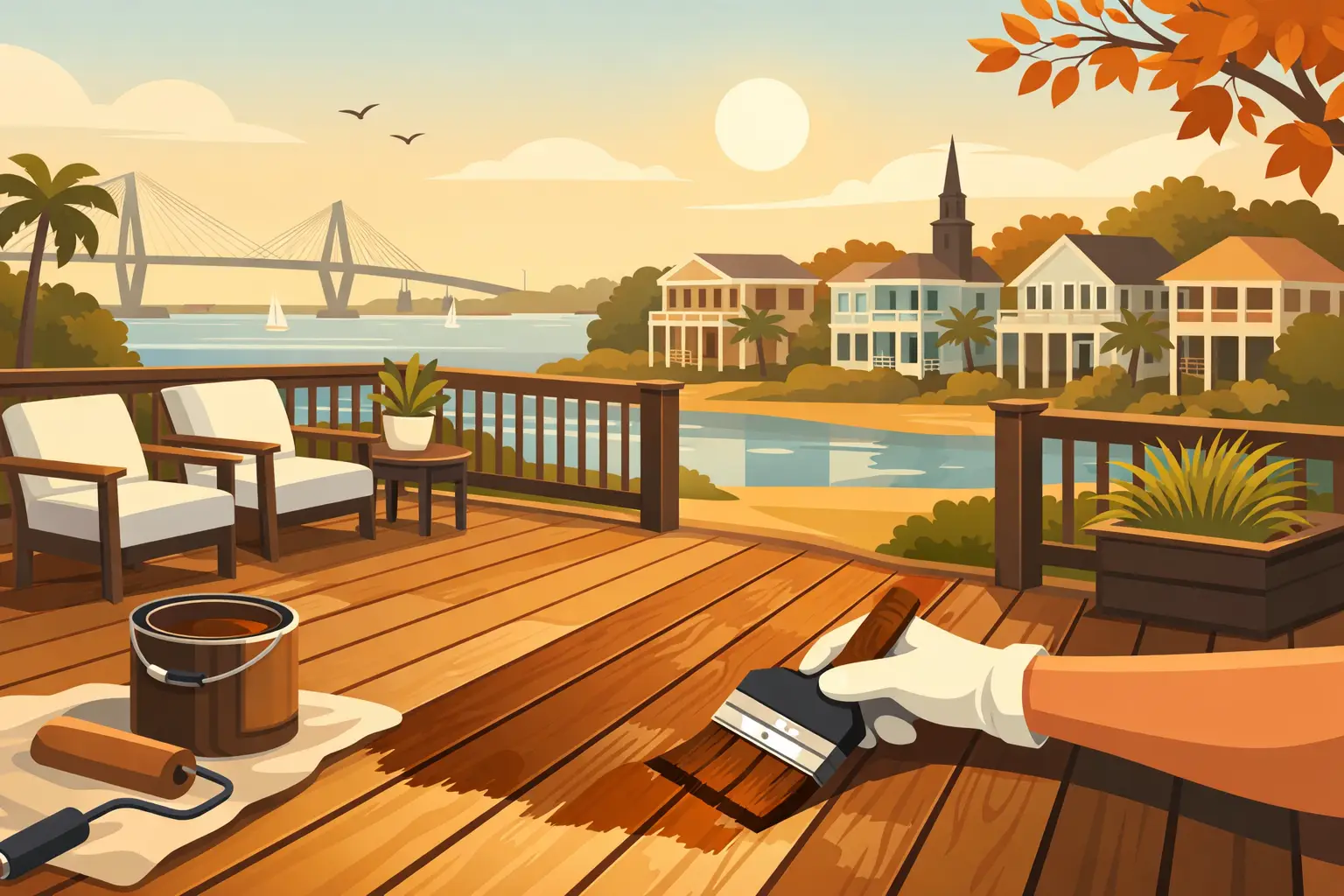
A Charleston deck can look worn out long before the boards are actually ready to be replaced. Sun fades the color, afternoon rain drives moisture into the wood, and humidity keeps surfaces damp enough for mildew and algae to take hold. Professional deck staining Charleston property owners schedule at the right time can restore the appearance of the wood while helping it stand up to another season outdoors.
The key is not simply applying stain. Good results depend on surface preparation, moisture conditions, the type of wood, and choosing a finish that fits how the deck is used. A rushed stain job may look better for a few weeks, then peel, turn blotchy, or trap problems beneath the surface.
Why Charleston Decks Need Regular Protection
Charleston weather is hard on exposed wood. Heat and ultraviolet light break down the wood fibers and fade old finishes. Heavy rain, high humidity, shade, and nearby vegetation encourage organic growth. On coastal properties, salt in the air can add another layer of surface buildup.
When a deck loses its protective finish, water begins soaking into the boards rather than beading on top. Over time, that can lead to swelling, splitting, raised grain, and a rough walking surface. Fasteners may loosen as boards expand and contract. The longer the wood stays wet, the more likely mildew staining and rot become in vulnerable areas.
Deck staining is preventive maintenance, but it also makes a noticeable difference in curb appeal. A clean, evenly finished deck gives a backyard, porch, or pool area a more cared-for appearance. That matters whether you use the space every weekend, manage a rental property, or are preparing a home for sale.
The Right Prep Work Makes the Finish Last
Stain should be applied to clean, dry, sound wood. This is where many do-it-yourself projects run into trouble. A deck may appear dry on top while holding moisture below the surface, especially after a stretch of humid weather or rain.
Cleaning Comes Before Staining
Before staining, the deck needs to be evaluated for mildew, algae, dirt, old loose finish, and gray weathered fibers. Cleaning removes the contamination that prevents stain from penetrating evenly. It also reveals issues that are easy to miss on a dirty deck, including popped nails, cracked boards, soft spots, and areas where water regularly pools.
Pressure washing can be useful, but too much pressure can damage wood. A strong stream held too close may leave wand marks, gouge softer boards, or raise the grain. Surface-appropriate cleaning is more effective than treating every deck like concrete. The goal is to remove buildup without damaging the wood that needs protection.
Some decks need more than a standard wash. If an old film-forming coating is peeling, portions of it may need to be removed before a new finish can look consistent. If the wood is heavily grayed or stained by tannins, a wood brightening step may help restore a more even base color. The right approach depends on the condition of the surface, not just its age.
Dry Time Is Not Optional
Charleston humidity makes drying time especially important. Applying stain before the boards have dried sufficiently can prevent proper penetration and adhesion. The result may be a finish that looks dark in spots, stays tacky, or fails earlier than it should.
A qualified deck staining contractor considers recent rainfall, shaded areas, morning dew, airflow beneath the deck, and the moisture condition of the wood. There is no one-size-fits-all number of drying days. A sunny, open deck may be ready sooner than a covered or heavily shaded deck after the same weather event.
Choosing the Best Stain for Your Deck
Not every deck needs the same product or color. The best option depends on the age and condition of the wood, how much direct sunlight it receives, and the level of maintenance you prefer.
Transparent and semi-transparent stains allow more of the natural grain to show through. They are often a strong choice for newer boards or decks with attractive wood character. Because these finishes penetrate the surface, they generally wear away gradually instead of peeling like a thick coating. The trade-off is that they may require more frequent maintenance on decks with intense sun exposure.
Semi-solid stains provide more color coverage while still retaining some wood texture. They can help create a more uniform appearance on older decks with uneven coloration or previous weathering. Solid-color stains offer the most coverage and are useful when the wood has visible variation that a lighter stain will not hide. However, a more opaque finish can eventually peel if preparation and maintenance are neglected.
Color should be practical as well as attractive. Very dark finishes can show pollen, dust, and footprints more easily. They may also feel hotter under bare feet during Charleston summers. Lighter shades can feel more comfortable in the sun but may show mildew staining in damp, shaded locations. A free estimate is a good time to discuss how the deck is used and which finish is most realistic for the property.
Signs It Is Time to Restain
You do not need to wait until boards are badly damaged to schedule service. The most useful warning sign is water behavior. If rainwater no longer beads and instead darkens the wood quickly, the deck is likely losing protection.
Other common signs include fading, a dull gray cast, rough or splintering boards, black or green organic staining, and areas of uneven color. Peeling or flaking is a stronger warning sign, particularly on decks with older solid-color coatings. It does not always mean replacement is necessary, but it does mean the surface needs careful prep before another finish is applied.
For many Charleston homes, inspecting the deck once a year is a practical routine. How often it needs staining depends on exposure. A covered porch with limited sun may hold its finish longer. A deck that receives strong afternoon sun, frequent rain, and heavy foot traffic may need attention sooner.
Timing Deck Staining Around Charleston Weather
Spring and fall are often comfortable times for exterior work, but the right staining window is based on conditions, not the calendar alone. The surface needs to be dry, temperatures need to fall within the product requirements, and rain should not be expected before the finish has time to set.
Summer work can be successful, but direct midday heat may cause stain to dry too quickly and make application more difficult. Morning dew and sudden storms also require careful scheduling. During cooler months, slower drying can be an issue in shaded areas. A professional plan accounts for the forecast and the specific layout of the deck rather than pushing ahead because a date is on the calendar.
Protecting the Deck Between Service Visits
A stained deck still benefits from basic upkeep. Keep leaves, pine needles, and planters from holding moisture against the boards. Move outdoor rugs occasionally so the wood can dry underneath, especially during humid periods. Clear gaps between boards when debris builds up, since blocked gaps allow water to sit on the surface.
It also helps to address drainage problems around the deck. Downspouts that empty beside the structure, leaking hose connections, and low areas that keep the underside damp can shorten the life of both the wood and the finish. If mildew begins showing up, cleaning it early is easier than waiting for it to become deeply embedded.
Get a Clear Plan for Your Deck
Deck staining is one of those jobs where preparation determines the result. The right cleaning method, adequate dry time, realistic stain selection, and careful application can extend the service life of the wood and make the outdoor space look ready to use again.
First Response Exterior Cleaning LLC provides deck staining for Charleston-area property owners who want a straightforward assessment, a free estimate, and workmanship backed by a satisfaction guarantee. If your deck is faded, slippery, weathered, or no longer repelling water, having it evaluated now can help you protect the boards before another stretch of heat, rain, and humidity takes a larger toll.