


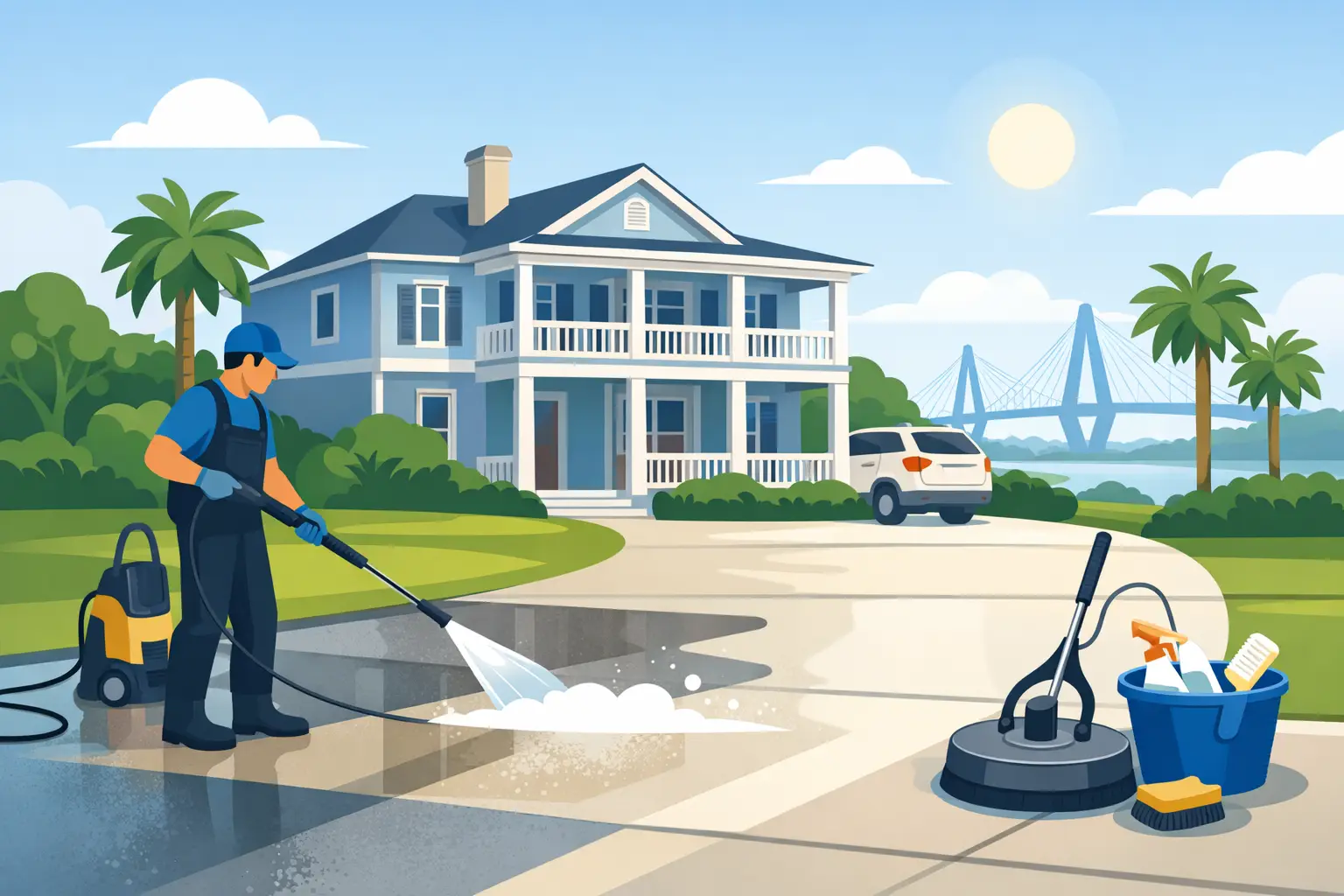
Charleston driveways take more abuse than most homeowners realize. Humidity feeds algae, frequent rain carries soil across concrete, oak debris leaves dark tannin stains, and parked vehicles add tire marks and fluid spots. Professional driveway cleaning Charleston homeowners schedule regularly removes that buildup before a once-bright entrance starts to look neglected.
A clean driveway changes the way the entire property presents from the street. It also helps reduce slick areas near garages, walkways, and front doors. For homeowners, landlords, sellers, and property managers, it is one of the most visible maintenance projects on the property.
Why Charleston Driveways Get Dirty So Fast
Concrete is durable, but it is not a smooth, sealed surface. It contains tiny pores that hold moisture, dirt, pollen, and organic matter. In the Lowcountry climate, that combination creates the right conditions for algae, mildew, and dark surface staining.
Shaded areas typically show growth first. The portion of a driveway beneath trees, beside the house, or near a fence may stay damp long after a rainstorm. Green, black, or gray discoloration can spread from those damp areas across the slab. It is more than a cosmetic issue when the growth becomes slick underfoot.
Charleston's seasonal pollen also settles into driveway pores. Rain does not simply rinse it away. Pollen, leaf residue, mud, and road grime can collect in edges, expansion joints, and the area where vehicles enter and exit. Over time, the driveway can look unevenly stained even when it has been swept often.
Tire marks are another common concern. Heat, vehicle traffic, and rubber residue leave dark tracks that ordinary rinsing usually will not remove. Oil and other automotive drips require a different approach than algae or dirt, and older stains may not disappear completely. A professional evaluation sets clear expectations before cleaning begins.
What Professional Driveway Cleaning in Charleston Includes
Effective driveway cleaning is not just a matter of using the highest pressure possible. Concrete can handle more pressure than siding or roof materials, but the right results still depend on the condition of the surface, the type of stain, and the tools being used.
The work typically starts by identifying problem areas. Organic growth, tire marks, rust stains, oil spots, dirt buildup, and paint overspray do not respond the same way. A surface cleaner is often used across larger concrete areas to provide a consistent finish without leaving visible cleaning stripes. Edges, corners, and areas around steps or garage doors receive detailed attention as needed.
For biological growth, an appropriate cleaning treatment helps break down algae and mildew so it can be rinsed from the concrete. This matters because blasting only the visible layer away may leave growth behind in the pores. The goal is a cleaner, more even driveway, not a rushed pass that looks good for a short time.
The cleaning process should also account for nearby landscaping, painted surfaces, and drainage. A responsible contractor prepares the work area, uses surface-appropriate methods, and takes care around the property. That detail is especially valuable on older driveways, decorative concrete, pavers, or surfaces with existing cracks.
Pressure Washing Is Not One-Setting Work
High pressure has a place in concrete cleaning, but more pressure is not automatically better. Concentrated pressure can leave lines, expose aggregate, or worsen weak areas in damaged concrete. Cleaning results come from using the right combination of treatment, controlled pressure, water flow, and equipment.
This is why a homeowner should be cautious about renting a machine and treating the job as simple weekend work. A rental pressure washer can remove surface dirt, but inconsistent technique often leaves stripes or misses the darker buildup in porous areas. It can also push debris into joints, flower beds, and garage thresholds.
When to Schedule Driveway Cleaning
There is no single calendar date that works for every Charleston home. A driveway under large trees or on the shaded side of a property may need attention more often than one that receives full sun and has little traffic. For many homes, annual driveway cleaning is a practical starting point.
Consider service sooner if algae is visible, the concrete feels slick after rain, or the driveway has become noticeably darker than the sidewalk and curb. Property owners preparing to sell or lease often schedule cleaning before photos, showings, inspections, or tenant turnover. The improvement is immediate, and it helps the rest of the exterior look better maintained.
Pairing driveway service with walkway, porch, siding, gutter, or roof cleaning can also make sense. Cleaning only one surface may make the contrast with surrounding buildup more noticeable. A full exterior plan can be more convenient when several areas need attention, although the right scope depends on the property and budget.
What Stains Can Be Removed?
Most routine organic buildup, surface dirt, pollen film, mud, and many tire marks respond well to professional cleaning. The improvement on neglected concrete can be dramatic, particularly when algae has created broad green or black areas.
Some stains require more realistic expectations. Oil that has soaked deeply into unsealed concrete may lighten significantly without vanishing completely. Rust stains from irrigation, metal furniture, or fertilizer may need specialized treatment. Paint, mortar, and old chemical stains can be difficult to remove without affecting the concrete's finish.
Age also matters. A driveway with spalling, cracking, exposed aggregate, or previous patch repairs needs a careful approach. Cleaning will not repair structural damage, and it may reveal color differences that dirt had hidden. A good contractor explains these trade-offs instead of promising a brand-new appearance on worn concrete.
Protect the Results After Cleaning
After driveway cleaning, basic habits can help the concrete stay cleaner longer. Sweep leaves and pine straw before they break down in damp areas. Rinse away fresh mud and fertilizer spills when possible. Address vehicle leaks promptly, since fresh oil is easier to treat than a stain that has had months to penetrate.
Trimming back vegetation can improve airflow and sunlight along shady edges. Check irrigation heads as well. Overspray that repeatedly wets the same section of concrete can encourage algae growth and create mineral staining. If the driveway is in good condition, sealing may be worth discussing with a qualified concrete professional. Sealer can make future cleaning easier, but it must be appropriate for the surface and applied correctly.
Avoid aggressive chemical products without knowing how they will react with concrete, nearby plants, or metal fixtures. Household cleaners may brighten one spot while leaving a blotchy finish or harming landscaping. When in doubt, it is better to get a professional opinion before applying a product that cannot easily be reversed.
A Cleaner Entrance Starts at Ground Level
The driveway is often the first large surface people see when they arrive. When it is dark with algae, marked by tires, or edged with mildew, even a well-kept home can appear overdue for maintenance. Clean concrete creates a sharper approach to the garage, porch, and front door without changing anything else about the property.
First Response Exterior Cleaning LLC provides professional exterior cleaning for Charleston-area property owners who want practical results, clear communication, and a free estimate. If your driveway is starting to look slick, stained, or weathered, addressing it now can help protect the appearance and day-to-day safety of the entrance before the next stretch of humid weather makes the buildup worse.