


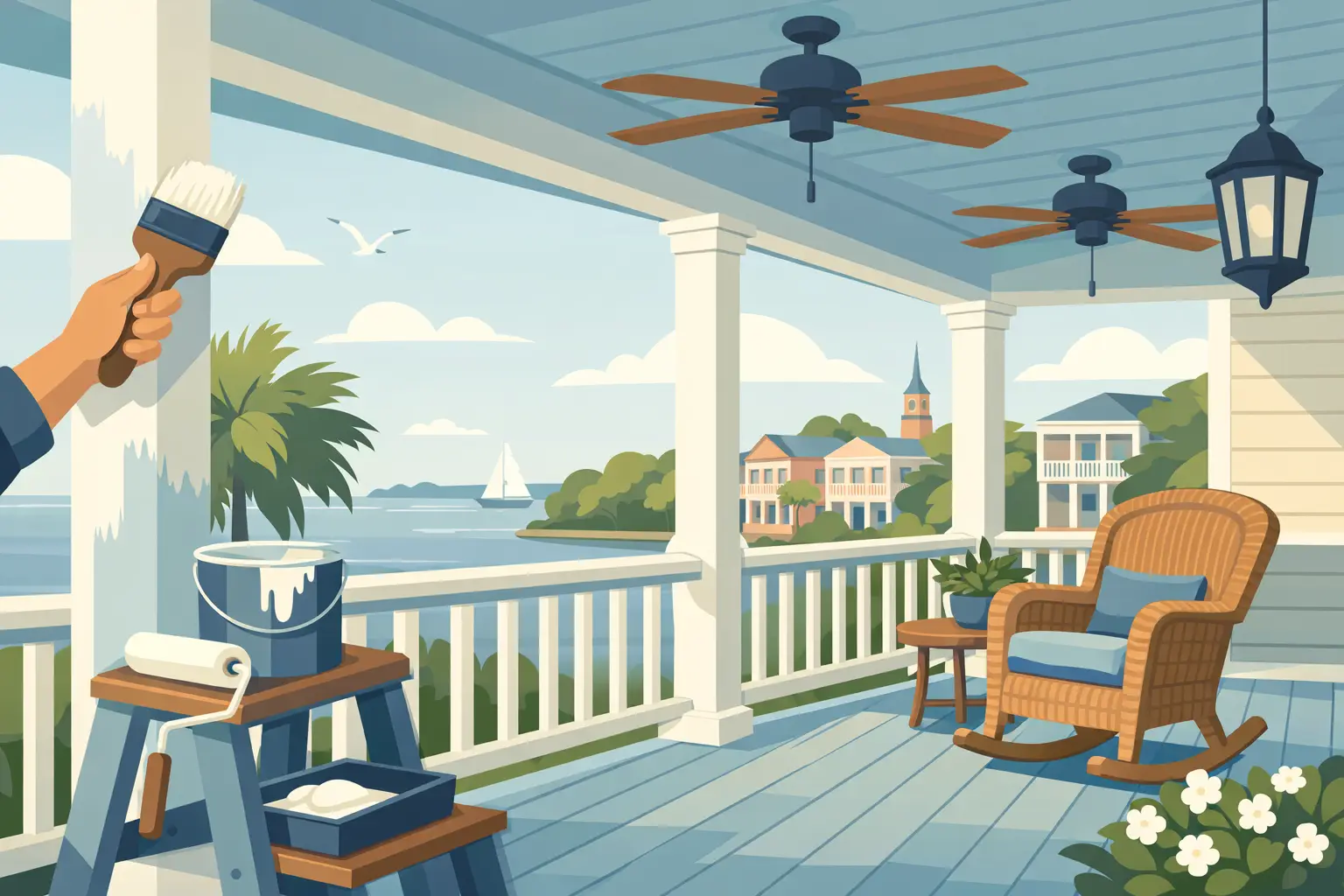
A faded porch can make an otherwise well-kept Charleston home look neglected fast. The search for front porch painting Charleston homeowners can rely on usually begins with peeling paint, gray railings, worn steps, or a floor that never looks clean for long. A fresh coat helps, but lasting results depend on more than picking a color and opening a paint can.
Charleston porches deal with heat, humidity, heavy rain, salt in the coastal air, pollen, mildew, and regular foot traffic. Those conditions can wear down painted wood and concrete quickly when the surface is not cleaned, repaired, and coated correctly. Professional preparation gives the new finish a better chance of looking good and protecting the porch through every season.
Why Charleston Porches Need More Than a Quick Coat
Paint fails for a reason. On a porch, the most common problems are moisture, organic growth, loose paint, dirty surfaces, and sun exposure. If paint is applied over mildew, chalky residue, or damp wood, it may look acceptable at first. Then it starts lifting, blistering, or peeling as humidity and rain work underneath the coating.
A porch floor also has a harder job than a railing or ceiling. It carries furniture, shoes, pet traffic, dropped planters, and standing water after a storm. The right paint and preparation method for a covered front porch may not be the right choice for exposed steps or a high-traffic entry landing.
That is why front porch painting in Charleston should start with an honest look at the surface. Some porches only need cleaning, spot repairs, and a new finish. Others need damaged boards replaced, old failing paint removed, or drainage issues addressed before painting makes sense.
Preparation Is What Makes Porch Paint Last
Good painting starts before the first brush stroke. Cleaning is not an optional extra on a coastal property. Pollen, dirt, algae, mildew, and airborne salt can create a barrier between the surface and the new coating. A properly cleaned porch gives paint a solid surface to bond to.
The cleaning method matters. Delicate painted trim, aging wood, and railings can be damaged by excessive pressure. Surface-appropriate soft washing and controlled pressure washing remove buildup without unnecessarily gouging wood or forcing water into vulnerable areas. The porch then needs adequate drying time before paint or primer is applied.
After cleaning, loose and peeling paint should be scraped and sanded. Rough edges need to be feathered so they do not show through the final coat. Nail pops, cracks, minor rot, and loose handrails should be handled before painting. Paint can improve appearance, but it cannot repair weak boards or solve water damage.
Watch for Moisture and Rot
Charleston's climate makes moisture checks especially valuable. Wood that stays damp is more likely to rot and less likely to hold paint. Look closely at stair treads, post bottoms, rail connections, and areas near planters or downspouts. These spots often collect water and show damage first.
If boards are soft, split, or badly deteriorated, replacement is usually the better long-term option. Painting over damaged wood may improve curb appeal for a short time, but the problem will continue underneath the coating. Addressing repairs first protects the investment in the finish.
Choosing the Right Paint for Your Porch Surface
Porch paint is not one-size-fits-all. The best coating depends on whether the surface is wood, concrete, composite material, or previously painted trim. It also depends on whether that area is covered, exposed to full sun, or constantly used as the main entrance.
For wood floors and steps, a durable exterior porch and floor coating is generally needed to handle foot traffic and weather. Railings, columns, and trim may use a different exterior paint with better coverage and flexibility. Concrete porches need products designed to adhere to masonry surfaces, especially if the concrete has old coatings, stains, or moisture concerns.
Color choice has practical consequences as well. Dark colors can look sharp and hide some dirt, but they absorb more heat in direct sun. Very light colors can brighten an entry but may show scuffs, pollen, and muddy footprints more easily. A medium neutral tone often gives homeowners a clean, durable-looking finish without demanding constant touch-ups.
Sheen matters too. Higher sheen finishes are easier to wipe down but may highlight imperfections in older wood. A lower sheen can disguise surface flaws better, though it may hold dirt more readily. The right balance depends on the porch condition and how the property is used.
Timing Front Porch Painting in Charleston
Charleston weather can change quickly, so scheduling matters. Paint needs appropriate temperatures and a dry surface to cure correctly. Painting during a rainy stretch, immediately after washing, or when humidity is extremely high can lead to poor adhesion and an uneven finish.
Spring and fall are often comfortable times to plan exterior work, but there is no single perfect month for every job. Summer painting can work when the forecast is managed carefully and work is scheduled around heat and afternoon storms. Winter can also offer suitable painting days, although cooler temperatures and overnight moisture still need attention.
A professional assessment should account for the porch's exposure. A shaded porch may dry more slowly than a porch in direct sun. A covered porch may be protected from rain but still hold humidity. The goal is not just to find a clear day. It is to create the conditions the specific coating needs to perform.
Paint, Stain, or a Different Repair Plan?
Paint is a strong option for many porches, especially when homeowners want a uniform color and a clean finish over previously painted wood. It can also provide a protective layer for trim, railings, and selected floor surfaces.
However, paint is not always the best answer. If a porch is built with wood that is in good condition and meant to show its natural grain, deck staining may be the better fit. Stain can provide color and water resistance while allowing the texture of the wood to remain visible. It also tends to wear differently than paint, which may make maintenance simpler on certain deck-style porch surfaces.
For concrete, the decision may involve cleaning, repair, and a coating designed specifically for masonry. If concrete is flaking, heavily cracked, or holding moisture, painting it without solving those conditions can create more visible problems later. A dependable contractor will explain the trade-offs rather than recommending the same service for every surface.
Protecting the Finished Porch
Once the porch is painted, small maintenance habits help preserve the finish. Keep leaves, wet mats, and planters from trapping moisture against the floor. Clean pollen and mildew before they become heavy buildup. Check gutters and downspouts so overflowing water is not repeatedly soaking porch steps, posts, or railings.
Avoid aggressive pressure washing on freshly painted surfaces. When cleaning is needed, use a surface-safe method that removes grime without stripping the coating. Touching up small chips early can also prevent water from getting behind the paint and lifting larger sections.
For rental homes, listings, and managed properties, scheduling routine exterior cleaning alongside porch maintenance can prevent a minor appearance issue from turning into a larger repair. A clean porch, walkway, siding, and entry area give visitors a better first impression before they ever step inside.
A Practical Way to Plan Your Porch Project
Start by identifying what is actually wrong: faded color, mildew, peeling paint, damaged boards, stained concrete, or a combination of several issues. From there, the work can be scoped correctly instead of treating every porch as a simple repaint.
First Response Exterior Cleaning LLC helps Charleston-area property owners evaluate exterior surfaces, clean away buildup, and restore worn porch areas with professional painting and maintenance services. A free estimate gives you a clear starting point, whether the porch needs a full repaint, cleaning and touch-up work, or repairs before a finish can be applied.
A well-painted front porch should do more than look fresh from the street. It should stand up to daily use, shed the effects of coastal weather, and make arriving home feel like the property is being cared for.