


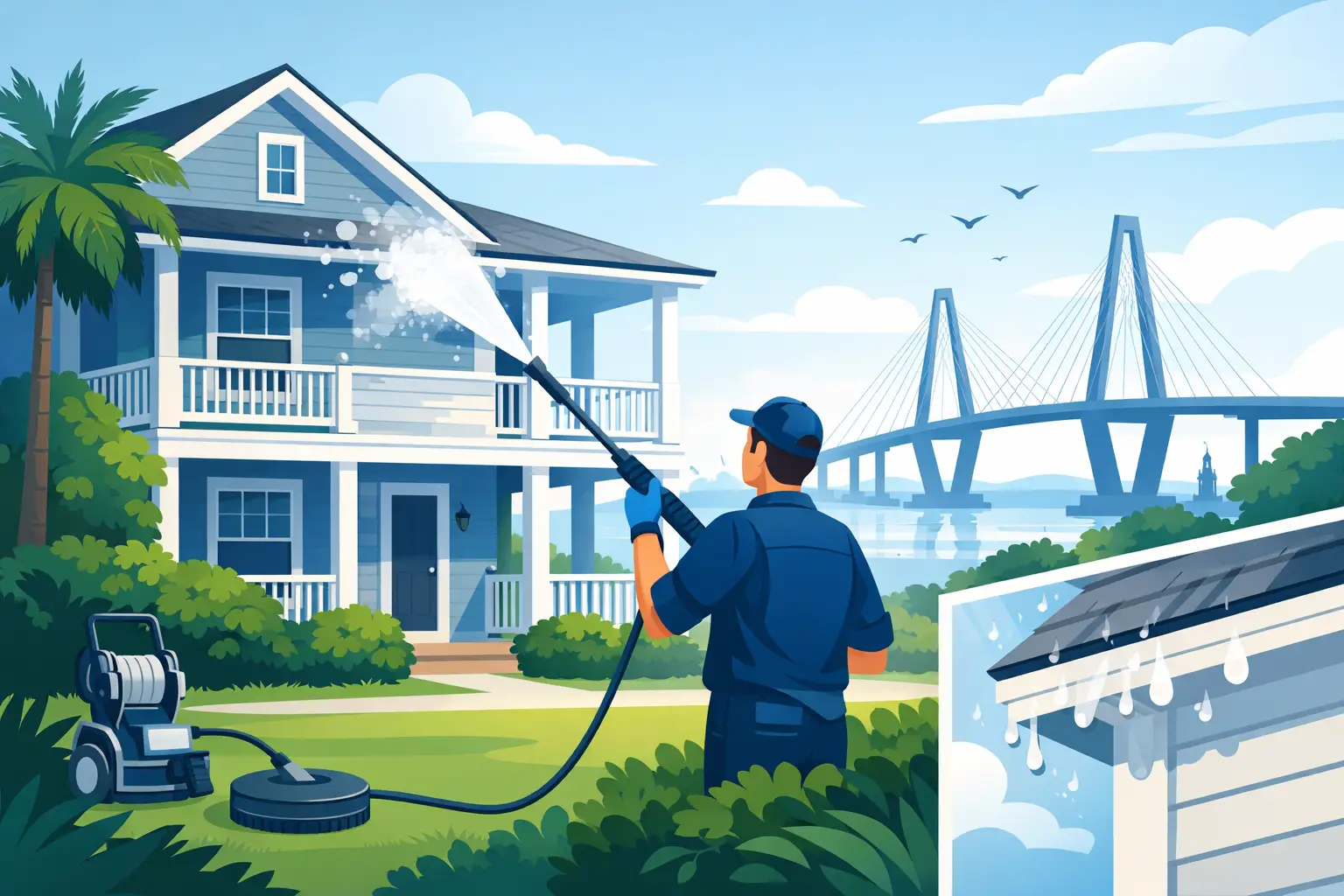
Charleston humidity does not leave exterior surfaces alone for long. A home can look clean after a dry stretch, then develop green algae, dark mildew, pollen film, and streaks around trim once warm, wet weather returns. Professional house washing removes that buildup before it becomes the feature visitors notice first.
For local homeowners, landlords, sellers, and property managers, the goal is more than brighter siding. The right cleaning method helps preserve painted surfaces, vinyl, stucco, brick, trim, porches, and other exterior materials while restoring the clean appearance that supports curb appeal. The wrong method can leave behind damage, water intrusion, or a surface that looks clean for only a short time.
Why Charleston Homes Need Regular House Washing
Coastal Lowcountry conditions create a steady cycle of exterior buildup. Heat and humidity feed algae and mildew. Rain carries grime into siding seams and around windows. Pollen settles heavily during the spring, while shade from trees allows moisture to stay on exterior walls longer. Homes near marshes, wooded areas, or the coast often see growth return faster than properties in drier, more open locations.
Algae and mildew are not always limited to obvious green patches. They can appear as dull gray film, black spotting, or uneven discoloration on shaded sides of the home. Light-colored siding may show the problem first, but darker surfaces collect the same contaminants. If a wall looks faded even after rain, feels slick in spots, or has streaks below gutters and window sills, cleaning is usually overdue.
Routine washing also keeps small maintenance concerns easier to see. Once dirt, organic growth, and cobwebs are removed, it is easier to spot cracked caulk, peeling paint, loose trim, damaged screens, and drainage issues that deserve attention.
Soft Washing vs. Pressure Washing Your Home
Not every exterior surface should be cleaned with the same level of pressure. This is where professional judgment matters. House siding is commonly cleaned with a soft washing approach that uses low-pressure water and surface-appropriate cleaning solutions. The solution does the work of breaking down algae, mildew, and grime, while the rinse removes it without driving high-pressure water behind siding or into window seals.
Pressure washing has a place on tougher, durable materials such as concrete driveways, walkways, and certain masonry surfaces. Used correctly, it can lift embedded dirt, tire marks, and dark organic staining that ordinary rinsing will not touch. Used carelessly, it can scar concrete, etch brick, strip paint, splinter wood, and damage vinyl siding.
The best method depends on the material, its condition, the type of staining, and the surrounding landscaping. A weathered painted porch, for example, needs a different approach than a stained concrete driveway. Roof cleaning requires its own specialized soft wash process as well. Treating every surface with maximum pressure is not thorough cleaning. It is a risk that homeowners do not need to take.
Surfaces That Need Extra Care
Vinyl siding, painted wood, Hardie board, stucco, and exterior trim can all look dramatically better after cleaning, but each has limits. Soft washing is generally the safer route because it removes organic growth without relying on force. Older painted surfaces may already have weak areas, and high pressure can turn a minor paint issue into a larger repair.
Brick and stone need care too. Mortar joints, older masonry, and decorative features can be vulnerable when too much pressure is used at close range. Windows, vents, electrical fixtures, door seals, and outdoor outlets should be protected during any house wash. Landscaping also deserves attention, especially delicate flowers and shrubs near the foundation.
What a Professional House Washing Service Should Address
A complete service starts with looking at the property rather than choosing a one-size-fits-all setting. The cleaning team should identify the siding material, level of buildup, areas with heavy shade, visible oxidation, peeling paint, and nearby surfaces that need protection. This allows the work to be planned safely and prevents surprises once cleaning begins.
The home exterior is then treated to loosen algae, mildew, pollen, and dirt. A controlled rinse removes the contamination from siding, soffits, fascia, trim, porch ceilings, entry areas, and other accessible exterior surfaces included in the scope of work. Attention to the details matters. Dirty soffits, window trim, and the front entry can make clean siding look unfinished.
A professional crew should also account for runoff and plants. Cleaning solutions must be applied correctly, and landscaping should be wetted and protected as needed throughout the process. Windows and exterior fixtures should be handled with care. The aim is visible results without creating a new problem somewhere else on the property.
At First Response Exterior Cleaning LLC, house washing is approached as part of practical exterior maintenance, not as a quick spray-and-go job. The condition of the surface determines the method, helping homeowners get a cleaner property without putting delicate finishes at unnecessary risk.
How Often Should You Wash a House in Charleston?
Most Charleston-area homes benefit from professional house washing about once a year. That schedule is a useful baseline, but it is not a hard rule. A home surrounded by large trees, located near water, or shaded on multiple sides may need cleaning every six to nine months. Homes with open exposure, lighter buildup, and regular maintenance may be able to wait longer.
The better measure is what you see on the exterior. When algae begins to spread, mildew appears around eaves, or siding loses its clean color, schedule service before the buildup becomes heavy. Waiting several years can make the project more difficult and can leave stains that are harder to remove completely.
If you are preparing to sell a home, house washing is one of the most direct ways to improve the first impression. Buyers often make an initial judgment before they enter the front door. Clean siding, a bright entry, and stain-free walkways signal that a property has been cared for. For landlords and property managers, regular cleaning helps keep rental homes presentable between tenants and reduces the scramble before inspections or showings.
Pair House Washing With the Right Exterior Services
A clean house can make neighboring problem areas stand out. That is not a reason to avoid washing. It is often the best time to handle the rest of the exterior in a coordinated visit.
Driveway and walkway cleaning can remove dark staining, algae, and grime that create a dull or slippery-looking approach to the home. Gutter cleaning helps restore proper drainage by removing leaves, pine straw, and debris that can cause overflow during heavy rain. Roof cleaning addresses the dark streaks and organic growth that commonly develop in humid coastal conditions, using a method suited to roofing materials.
Porches and decks require a separate assessment. Wood can be damaged by excessive pressure, and a deck that looks gray or weathered may need cleaning followed by staining to restore protection and color. Front-porch painting can also make a major difference when railings, columns, or floor surfaces have peeling or worn finishes. Combining services can be convenient, but each surface still needs its own proper process.
When DIY Cleaning Is Not the Best Option
Homeowners can handle light rinsing and routine yard care, but a rental pressure washer is not always the right tool for exterior cleaning. Equipment often provides more force than a person expects, and improper technique can leave striping, remove paint, force water into the wall system, or damage window screens and seals. Cleaning chemicals also require careful mixing, application, and plant protection.
DIY work may be reasonable for a small, accessible concrete area when the operator understands the equipment and surface. It becomes less sensible when the job involves a two-story home, heavy algae growth, delicate siding, roof surfaces, or areas near landscaping and electrical fixtures. The cost of correcting damage can exceed the cost of having the work done properly from the start.
Before scheduling any service, walk around the home and note the sides with the heaviest growth, stained concrete, overflowing gutters, worn porch paint, or faded deck boards. That simple check helps produce a more accurate free estimate and ensures the work focuses on the areas that will make the biggest difference. A clean exterior is easier to maintain, easier to inspect, and more welcoming every time you pull into the driveway.