


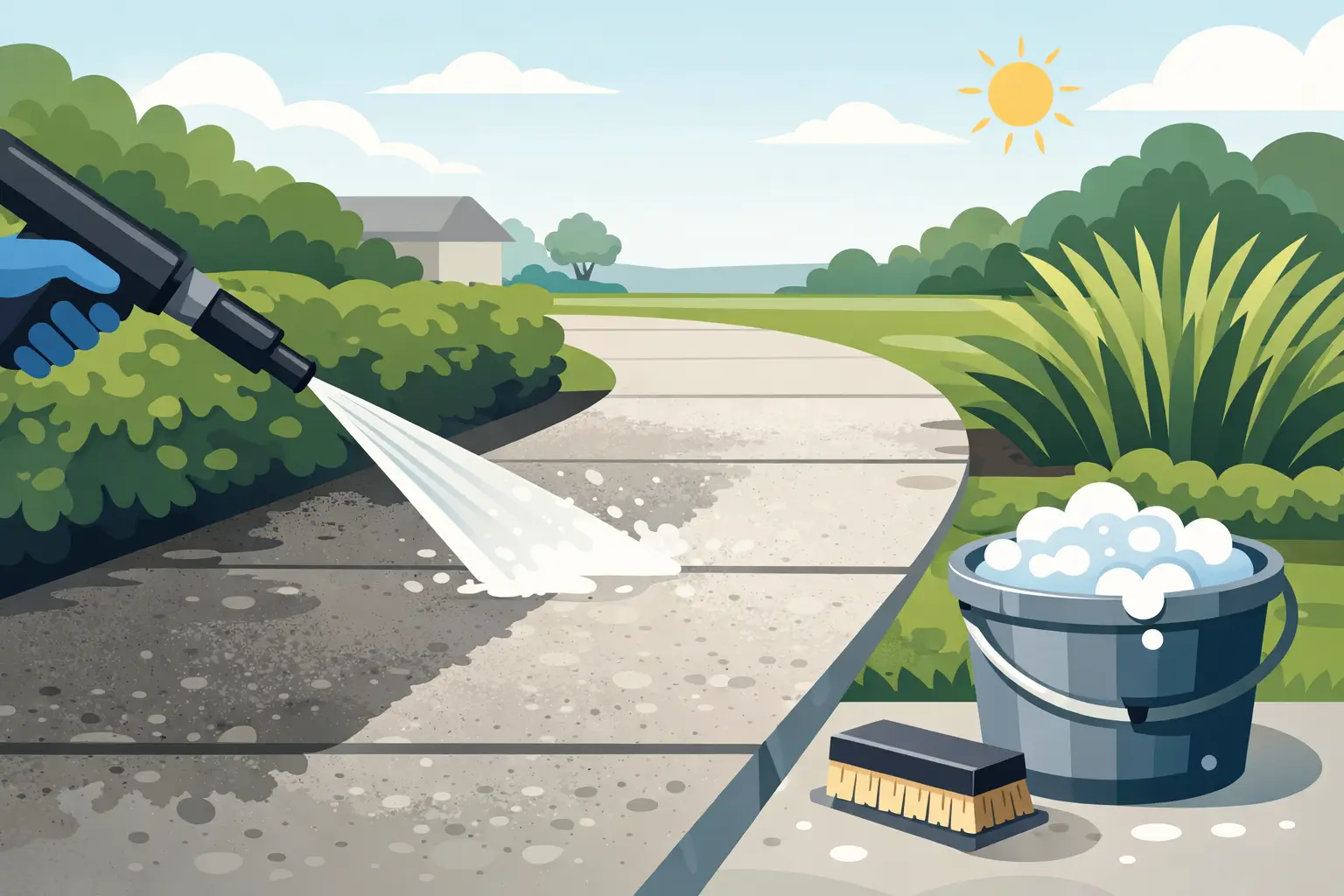
A concrete walkway can make the front of an otherwise well-kept home look neglected fast. In Charleston, shade, humidity, rain, oak debris, and coastal moisture create ideal conditions for algae, mildew, and dark organic staining. If you are searching for how to clean concrete walkway surfaces safely, the goal is not just to make the path look brighter for a day. It is to remove the growth causing the discoloration without damaging the concrete, nearby landscaping, or surrounding finishes.
Start by Identifying What Is on the Concrete
Not every dark spot needs the same treatment. Green or black film is usually algae, mildew, or other organic growth. It often appears on shaded walkways, especially near downspouts, trees, garden beds, and the north side of a home. These areas can become slick after rain, so cleaning is also a safety issue.
Brown marks may come from leaves, acorns, mulch, or rusting outdoor furniture. Black, dark gray, or oily spots can be vehicle residue, grill grease, or ground-in dirt. White powdery residue, called efflorescence, is mineral salt left behind as moisture moves through the concrete. A basic wash can improve some stains, but treating the wrong problem with too much pressure or the wrong chemical can leave permanent marks.
Before starting, sweep away loose dirt, pine straw, leaves, and mulch. This keeps debris from turning into muddy runoff and lets your cleaner reach the concrete evenly. Move planters, furniture, mats, and anything metal that could rust or react to a cleaning solution.
How to Clean a Concrete Walkway Step by Step
For a lightly soiled walkway, a garden hose, stiff nylon-bristle brush, and a concrete-safe cleaner may be enough. For heavier organic growth, use a treatment designed for exterior concrete and follow the label directions exactly. Never assume a stronger mix will produce a better result. On concrete, excess chemical can discolor the surface, harm plants, and leave uneven results.
Wet Nearby Plants and Surfaces First
Before applying any cleaning product, thoroughly wet grass, shrubs, flowers, painted surfaces, and nearby siding. Keep them wet during the job, then rinse again when the work is finished. Water dilutes accidental overspray and helps protect landscaping.
Covering sensitive plants can help in some situations, but do not leave plastic sheeting in place for long in Charleston heat. It can trap heat and stress the plant. A steady rinse before, during, and after cleaning is often the more practical approach.
Apply Cleaner From the Bottom Up
Apply your cleaner in manageable sections, starting at the lower end of the walkway and working upward. This reduces streaking and keeps the surface evenly wet. Allow the product to dwell only as long as its instructions recommend. Do not let it dry on the concrete.
Use a stiff nylon brush to agitate stubborn areas, especially where algae has settled into the texture of the surface. Avoid wire brushes. Metal bristles can leave rust particles behind and create new orange stains that are harder to remove than the original discoloration.
Rinse Thoroughly and Evenly
Rinse from the top of the walkway down, moving dirt and cleaner toward a safe drainage area. Take your time around edges, joints, and transitions near brick, wood, painted porch surfaces, or landscaping. Leftover cleaner can leave a patchy appearance or continue affecting nearby grass.
If the walkway still has visible staining after rinsing, let it dry before deciding whether it needs another treatment. Wet concrete naturally looks darker, and repeated applications made too quickly can create uneven color.
Using a Pressure Washer Without Etching Concrete
Pressure washing can be effective for ground-in grime and widespread staining, but it is not automatically the best first step. A pressure washer used too close to the surface can etch concrete, exposing aggregate and creating visible lines. Once concrete has been scarred this way, cleaning will not restore its original finish.
If you use a pressure washer, start with the lowest effective pressure and a wide fan-tip nozzle. Keep the wand moving in smooth, overlapping passes and maintain a consistent distance from the surface. Do not stop in one place, especially at edges or near expansion joints. A surface cleaner attachment often gives more uniform results than a wand because it distributes water over a larger area.
Pressure alone does not solve organic growth. It may remove the visible layer while leaving spores behind in the pores of the concrete. That is why a surface-appropriate cleaning treatment followed by a controlled rinse often produces a cleaner, longer-lasting result.
Avoid using high pressure on cracked, crumbling, or recently repaired concrete. Water can force its way into weak spots and make surface damage worse. If you see flaking, exposed aggregate, loose coating, or extensive cracking, assess the condition of the walkway before cleaning aggressively.
Treating Common Concrete Walkway Stains
Organic staining is the most common issue around Charleston homes. A properly diluted exterior cleaner and gentle agitation usually handle algae and mildew better than brute force. For recurring growth in a deeply shaded area, address the source too. Trim back vegetation where appropriate, clear clogged gutters that overflow onto the path, and keep leaves from sitting on the concrete after storms.
Oil and grease stains require a degreaser made for concrete. Apply it to a dry surface when possible, let it work as directed, scrub, and rinse. Older oil stains may lighten substantially without disappearing completely because the oil has penetrated the concrete. Setting realistic expectations matters, particularly on older walkways.
Rust stains need a rust-specific concrete product. Do not use a general cleaner and keep adding pressure when rust remains. That approach can damage the concrete while doing little to the stain. Test any specialized cleaner in an inconspicuous area first.
For efflorescence, start with dry brushing and a gentle rinse. Heavy mineral deposits may need a concrete-safe treatment, but acid-based products deserve extra caution. They can alter the finish, damage adjacent materials, and create safety concerns if used incorrectly. This is a situation where professional evaluation is often worth it.
Cleaning Mistakes That Create Bigger Problems
The most common mistake is treating concrete like it can withstand anything. It is durable, but its finish can still be damaged by excessive pressure, concentrated chemicals, and rushed technique. Avoid mixing cleaning products, especially bleach with ammonia, acids, or other household chemicals. Dangerous fumes can result.
Do not wash cleaning runoff directly into storm drains. Work carefully, use only the amount of product needed, and keep rinse water controlled. Also avoid cleaning on an extremely hot, sunny afternoon when solutions dry too quickly. Early morning or a cooler, overcast period can give you more control.
Another mistake is ignoring the edges of the walkway. Dirt commonly builds up where concrete meets mulch, grass, or pavers. Cleaning those borders carefully makes the whole path look sharper, but direct high pressure into the edge can displace joint material, soil, or mulch.
When It Is Better to Call a Professional
A homeowner can handle routine walkway cleaning, especially when the staining is light and the concrete is in good shape. Professional service makes more sense when the walkway has widespread black staining, slick algae, deep oil marks, rust, uneven coloring, fragile concrete, or nearby surfaces that need protection.
It can also be the right choice when the walkway is part of a larger curb-appeal project. Cleaning a path at the same time as a driveway, front porch, siding, gutters, or deck can give the property a more consistent finish. For Charleston-area homes, First Response Exterior Cleaning LLC can assess the surface, use the appropriate soft washing or pressure washing method, and provide a free estimate before work begins.
Keep the Walkway Cleaner Between Washings
A clean walkway stays cleaner when water and debris have somewhere else to go. Sweep leaves and pine straw regularly, especially after storms. Keep gutters and downspouts flowing away from the path, and remove standing water where possible. If shrubs create constant shade and hold moisture against the concrete, selective trimming can make a noticeable difference.
Most Charleston walkways benefit from cleaning once or twice a year, though heavily shaded areas may need attention more often. Watch for the first light green film rather than waiting until the concrete turns black and slick. A small maintenance cleaning is easier on the surface and usually less work than correcting months of buildup.
A brighter walkway changes the first few steps visitors take toward your home. Clean it with patience, protect the surfaces around it, and respond early when algae starts to return. That approach keeps your concrete safer underfoot and your property looking cared for year-round.