


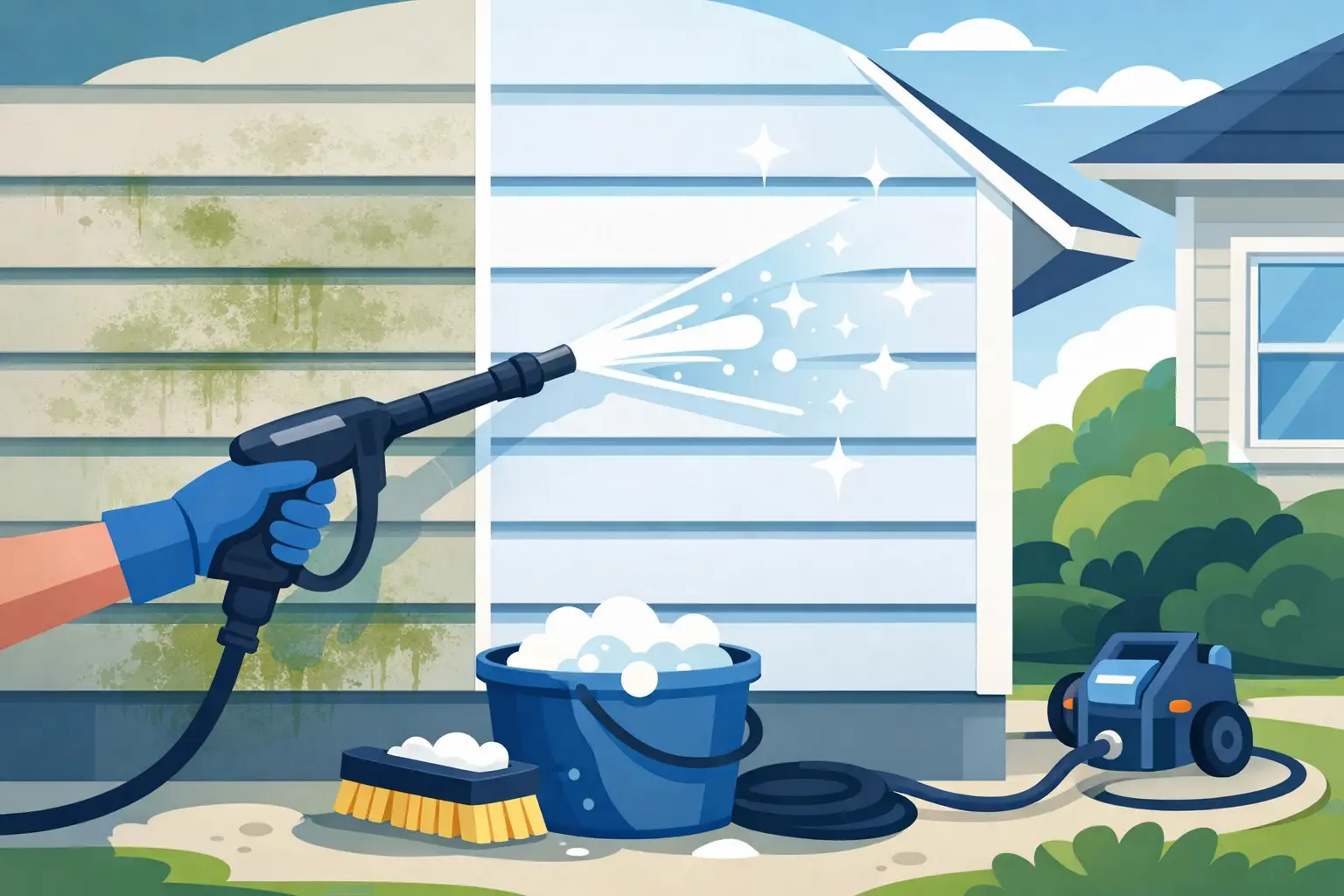
Charleston humidity is hard on a home’s exterior. A layer of green algae, black mildew spotting, pollen, and salt-laden grime can make vinyl siding look older than it is. Knowing how to wash vinyl siding the right way helps restore curb appeal without forcing water behind the panels, leaving streaks, or damaging landscaping.
Vinyl is durable, but it is not a surface that needs aggressive pressure. Most siding responds best to a controlled soft wash approach: the right cleaning solution, gentle water flow, and enough dwell time to lift organic growth. For tall homes, heavy buildup, or siding near delicate landscaping, hiring a local exterior cleaning professional is often the safer and faster option.
What Makes Vinyl Siding Dirty in Charleston?
In the Lowcountry, organic growth is usually the main issue. Warm temperatures and frequent moisture create ideal conditions for algae and mildew, especially on shaded sides of the house. North-facing walls, areas under trees, and siding near gutters or downspouts often show buildup first.
Pollen, dirt, spider webs, and airborne debris add to the problem. After a storm or a long stretch of humid weather, grime can settle into the texture of the panels and around trim. Cleaning it early is easier than waiting until dark staining becomes widespread.
Not every stain is surface dirt. Rust stains from irrigation, discoloration from mulch, faded areas, or chalky oxidation may need a different treatment. A basic wash can improve many of these issues, but it will not correct permanent fading or material damage.
Gather the Right Supplies Before You Start
A garden hose, a soft-bristle brush, and a mild siding-safe cleaner handle many routine jobs. Avoid wire brushes, abrasive pads, and harsh solvent-based cleaners. They can scratch the vinyl or dull its finish.
For a typical homeowner wash, gather these items:
- Garden hose with an adjustable spray nozzle
- Bucket and soft-bristle brush with an extension handle
- Vinyl-safe house wash or mild detergent
- Protective gloves and safety glasses
- Plastic sheeting or a hose for pre-wetting nearby plants
Read the cleaner label before mixing or applying it. If you use a bleach-based product for mildew, never mix it with ammonia or any other household cleaner. Follow the product directions and use the mildest effective dilution. The siding manufacturer’s care instructions should always take priority if they recommend a specific cleaner.
How to Wash Vinyl Siding Safely
Protect plants, outlets, and nearby surfaces
Start by moving patio furniture, grills, and décor away from the wall. Close windows and doors, and cover exterior electrical outlets if needed. Pre-wet shrubs, flowers, and grass around the work area. Keeping plants wet before and after cleaning helps reduce their exposure to cleaning solution.
Take a close look at caulking, loose panels, damaged trim, and cracked window seals. Cleaning will not fix these problems, and spraying directly into a gap can send moisture where it does not belong. Address repairs first or avoid those areas until they are fixed.
Rinse away loose dirt first
Use a garden hose to rinse loose dust, pollen, and cobwebs from the siding. Keep the spray pointed downward or straight at the wall, not upward beneath the panel laps. Vinyl siding is designed to shed rain, so forcing water upward behind the panels can create moisture problems behind the exterior.
Work in manageable sections, especially on sunny days. A section about 6 to 10 feet wide is usually easier to control than trying to wash an entire side of the house at once.
Apply cleaner from the bottom up
Apply your siding cleaner from the bottom of the section and work upward. This method helps prevent dirty solution from running down a dry wall and leaving streak marks. Let the product sit only as long as its instructions allow. Do not let cleaner dry on the siding.
For light grime, a soft brush may not be necessary. For algae around corners, trim, and textured panels, gently agitate the area with a soft-bristle brush. Use steady, light pressure. Scrubbing hard does not improve the result and can leave visible scuffing.
Rinse from the top down
Once the cleaner has done its job, rinse thoroughly from the top of the section down. Again, direct water downward so it follows the siding’s natural overlap. Check corners, trim boards, and the underside of window sills for cleaner residue.
A complete rinse matters. Cleaner left behind can attract dirt, leave a haze, or stress nearby plants when it washes down later. Re-wet landscaping after each section, particularly if you are using any mildew treatment.
Check your work before moving on
Step back after rinsing to see whether dark spots are truly gone or simply wet and less visible. Some mildew stains need a second gentle application rather than heavier pressure. If a mark does not respond to normal siding cleaner, identify the stain before trying stronger products.
For example, orange staining near sprinklers may be rust, while a dull, powdery surface can indicate oxidation. Treating either one like algae may produce disappointing results or make the finish look uneven.
Should You Use a Pressure Washer on Vinyl Siding?
It depends on the equipment, the operator, and the condition of the home. A pressure washer can rinse a large area quickly, but high pressure is unnecessary for vinyl siding and can cause expensive trouble. It may crack older panels, strip paint from trim, damage screens, or drive water behind siding, around windows, and into soffits.
If you choose to use one, use a wide fan tip, keep the pressure low, stand several feet back, and never aim upward beneath the panels. Do not use a narrow, concentrated tip. Test an inconspicuous area first and keep the spray moving.
For most Charleston homes, soft washing is the better method. Soft washing uses low-pressure application and rinsing with a surface-appropriate cleaning solution to remove algae, mildew, and grime. The solution does the cleaning work instead of a hard stream of water.
When DIY Cleaning Is Not the Best Choice
A one-story home with light buildup is often manageable for a careful homeowner. The job becomes less practical when siding is two stories high, growth is heavy, landscaping is extensive, or stains have several possible causes. Ladder work while handling a hose, brush, and cleaning solution creates a real fall risk.
Professional service also makes sense before listing a home, after a long period of neglect, or when you want the siding, concrete, gutters, and other exterior surfaces addressed during the same visit. A trained crew can select the appropriate method for each surface instead of using one setting or solution everywhere.
First Response Exterior Cleaning LLC provides professional soft washing for Charleston-area homes, with a focus on visible results and surface-safe cleaning. A free estimate can help determine whether your siding needs a routine wash, targeted treatment for organic growth, or a broader exterior cleaning plan.
How Often Should Vinyl Siding Be Washed?
Most homes benefit from a thorough siding wash about once a year. In shaded, wooded, or high-moisture areas of Charleston, some homes need attention every six to nine months. Waiting until algae is thick or mildew is widespread makes the job harder and can leave the property looking neglected between cleanings.
You can stretch the time between washings by trimming vegetation back from the house, keeping gutters clear, correcting sprinkler overspray, and rinsing off heavy pollen when it accumulates. These small maintenance steps reduce the moisture and debris that feed organic growth.
A clean wall should look refreshed, not blasted. Use gentle methods, rinse thoroughly, and deal with early signs of algae before they spread across the siding. That approach protects your home’s finish and keeps its curb appeal working for you.