

Black roof streaks can make an otherwise well-kept Charleston home look neglected from the street. If you need to remove algae from roof shingles, the method matters as much as the cleaner you use. The wrong approach can strip protective granules, damage shingles, harm landscaping, or create a fall hazard. A roof should be cleaned carefully with a surface-appropriate process, not treated like a driveway.
Why Roof Shingles Develop Algae Streaks
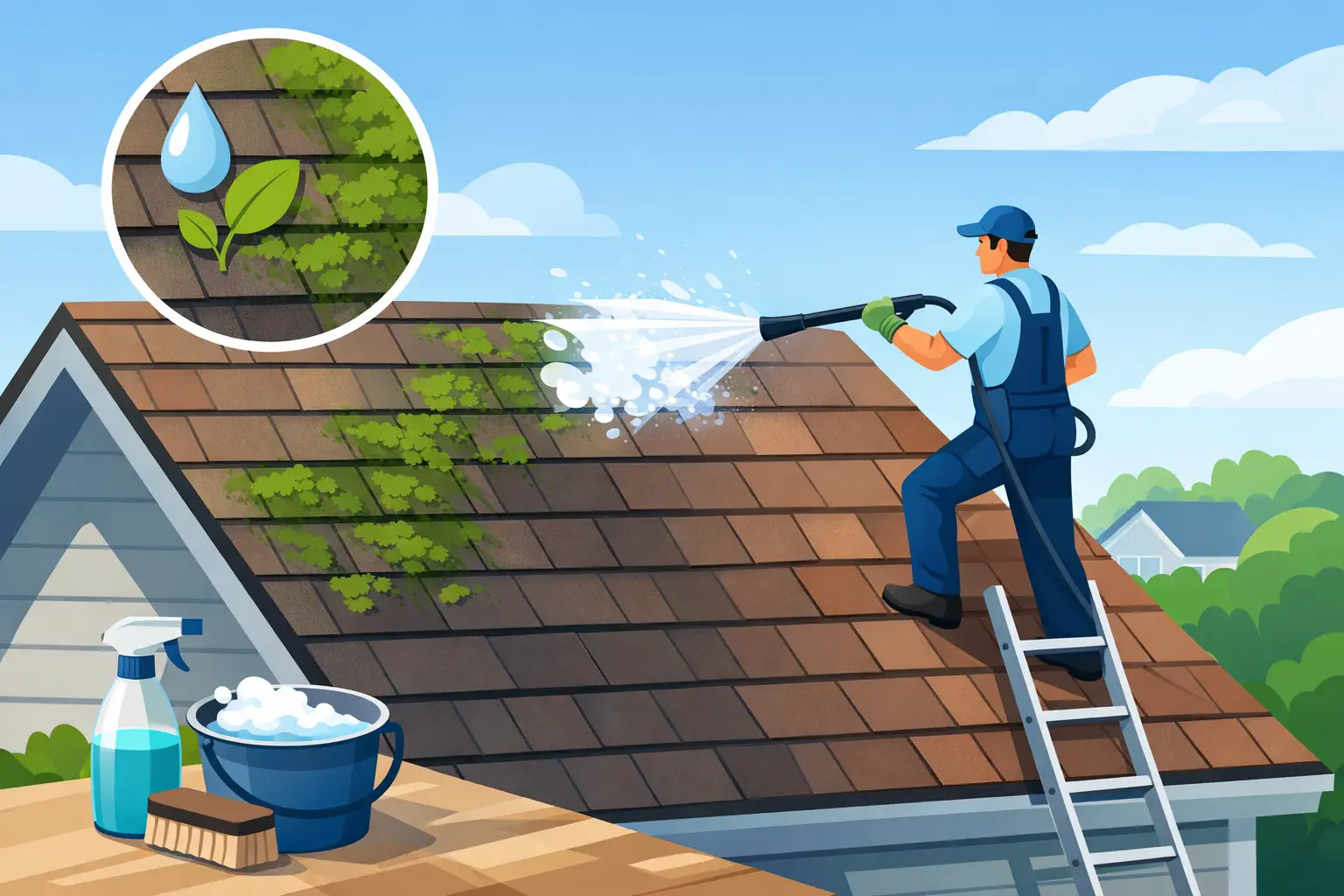
The dark marks commonly seen on asphalt roofs are often algae growth, not simple dirt. In warm, humid coastal conditions, moisture remains on shaded roof sections longer. That creates a favorable environment for algae, mildew, moss, lichen, and airborne debris to build up over time.
Charleston-area homes are especially prone to this problem. Mature trees, frequent rain, humid summers, salt air, and shaded rooflines all contribute. North-facing slopes and areas beneath overhanging branches often develop staining first because they dry more slowly.
Algae can spread across the roof in dark streaks or broad discolored patches. While it may begin as a curb-appeal concern, leaving organic growth untreated can hold moisture against the roof surface. Moss and lichen are more concerning because they can root into or under shingle edges, potentially affecting drainage and shingle performance.
How to Remove Algae From Roof Shingles Without Damage
The safest cleaning method for most asphalt shingle roofs is low-pressure soft washing with a roof-safe cleaning solution. The solution is applied carefully, allowed to work on the algae, and then managed according to the roof condition and product instructions. The goal is to treat the organic growth without blasting the roof surface.
A proper roof-cleaning process starts with an inspection. Look for loose, curling, cracked, or missing shingles; exposed nail heads; damaged flashing; soft spots; and heavy moss or lichen. Cleaning does not repair a failing roof, and a roof with significant damage may need evaluation by a roofing professional before any washing begins.
Before treatment, gutters should be clear enough to carry runoff, and nearby plants should be thoroughly watered. Professional crews also protect sensitive landscaping and monitor rinse water throughout the job. This step is particularly important around flower beds, shrubs, painted surfaces, and outdoor living areas.
The cleaning solution should be made specifically for roof algae removal or used according to the shingle manufacturer's cleaning guidance. Application should be controlled and low pressure. A soft-wash system uses a gentle delivery method, allowing the cleaning solution to do the work instead of relying on force.
Some staining may lighten quickly, while heavier algae, moss, or lichen can take longer to release. Forcing stubborn growth off with aggressive brushing or high-pressure rinsing creates more risk than benefit. Patience is part of a safe roof-cleaning job.
Never Pressure Wash Asphalt Shingles
Pressure washing is effective on durable surfaces such as many concrete driveways and walkways, but asphalt shingles are different. High pressure can dislodge the protective granules embedded in the shingle surface. Those granules help shield the roof from sun exposure and weather.
A pressure washer can also lift shingle edges, force water beneath shingles, and shorten the roof's useful life. Even if the roof looks clean immediately afterward, the damage may not be obvious until later. For shingle roofs, low-pressure soft washing is the appropriate approach.
Why DIY Roof Cleaning Has Limits
A homeowner may be able to address light staining on a low, accessible roof, but roof cleaning is not a routine weekend project for every property. The main risk is not the cleaner. It is working around wet surfaces, steep pitches, roof edges, power lines, landscaping, and runoff while trying to get an even result.
Do not climb onto a roof without proper fall protection and a clear understanding of its condition. Wet algae, cleaner overspray, and granule-covered shingles can make footing unpredictable. Using a ladder without a spotter or attempting to reach difficult roof sections from an unsafe position can turn a cosmetic problem into an emergency.
Homeowners should also avoid mixing cleaning chemicals or using household products without confirming that they are suitable for roofs. Certain products can discolor shingles, damage metal components, affect painted surfaces, or harm vegetation. More chemical is not automatically better. Correct dilution, controlled application, and thorough site protection make a real difference.
If the roof is two stories high, steep, heavily stained, covered in moss, or surrounded by landscaping you want to protect, hiring a professional is usually the practical choice. A trained exterior cleaning crew has the equipment to apply roof-safe treatments from a safer position while managing the surrounding property.
When Algae Is More Than a Cosmetic Issue
Algae alone does not always mean your roof is failing. However, it should prompt a closer look at the roof and its drainage. Dark streaks can hide cracked shingles, nail pops, damaged flashing, or debris buildup in valleys and gutters.
Moss and lichen deserve faster attention than light algae staining. These growths can trap moisture and gradually work beneath shingle edges. Heavy debris, such as pine needles and leaves, can create the same problem by holding moisture in place and preventing water from moving freely toward gutters.
After cleaning, inspect the roof from the ground at least twice a year and after major storms. Watch for new streaking, loose debris, overflowing gutters, or changes in the roofline. Early maintenance is typically easier and less expensive than waiting until organic growth is widespread.
Keeping Roof Algae From Returning
No cleaning method can permanently prevent algae in a humid coastal climate, but a few maintenance habits can slow its return. Trim branches that heavily shade the roof or drop excessive debris. Keep gutters and roof valleys clear so water can move away from the home as intended.
Ventilation also matters. An attic that holds excessive heat and moisture can contribute to roofing issues, although it is not the only cause of exterior staining. If you notice repeated moisture concerns, check that attic ventilation and insulation are performing as they should.
Some homeowners consider algae-resistant shingles or metal strips near the roof ridge when replacing an aging roof. These options may help reduce future staining, but they are not a substitute for routine inspections and cleaning. Their effectiveness depends on the roof design, local conditions, and the amount of shade around the property.
Professional Soft Washing for Charleston Roofs
Professional roof cleaning is designed to restore a cleaner appearance without treating shingles like a hardscape surface. The best service starts with an honest evaluation of the roof, the amount of organic growth, access conditions, drainage, and nearby landscaping. It should also include a clear explanation of how the property will be protected during the work.
First Response Exterior Cleaning LLC provides professional soft washing for Charleston-area property owners who want a cleaner roof without the risks of high-pressure cleaning. A free estimate makes it easier to assess the job before committing, whether you are maintaining your home, preparing a property for sale, or managing a rental.
A clean roof can noticeably improve curb appeal, especially when paired with exterior house washing, gutter cleaning, and concrete cleaning. Still, the priority should remain protecting the roof surface and the property around it. The fastest-looking method is not always the safest one.
If dark streaks are spreading across your shingles, address them before they become a heavier buildup. A careful inspection and the right soft-wash treatment can help your roof look cared for while keeping the work focused on long-term property maintenance.