

Charleston’s humidity, shade from mature trees, salt air, and frequent rain give algae and mildew plenty of opportunity to spread. A green film on siding, black roof streaks, and darkened walkways are not just curb-appeal problems. Left alone, organic buildup can hold moisture against exterior materials and make hard surfaces slippery.
When comparing soft washing vs pressure washing, the right choice comes down to the surface, the type of staining, and the condition of the material. Both methods can produce a dramatic improvement, but they do different jobs. Using the wrong approach can damage shingles, scar wood, force water behind siding, or simply fail to remove the source of recurring growth.
Soft Washing vs Pressure Washing: The Main Difference
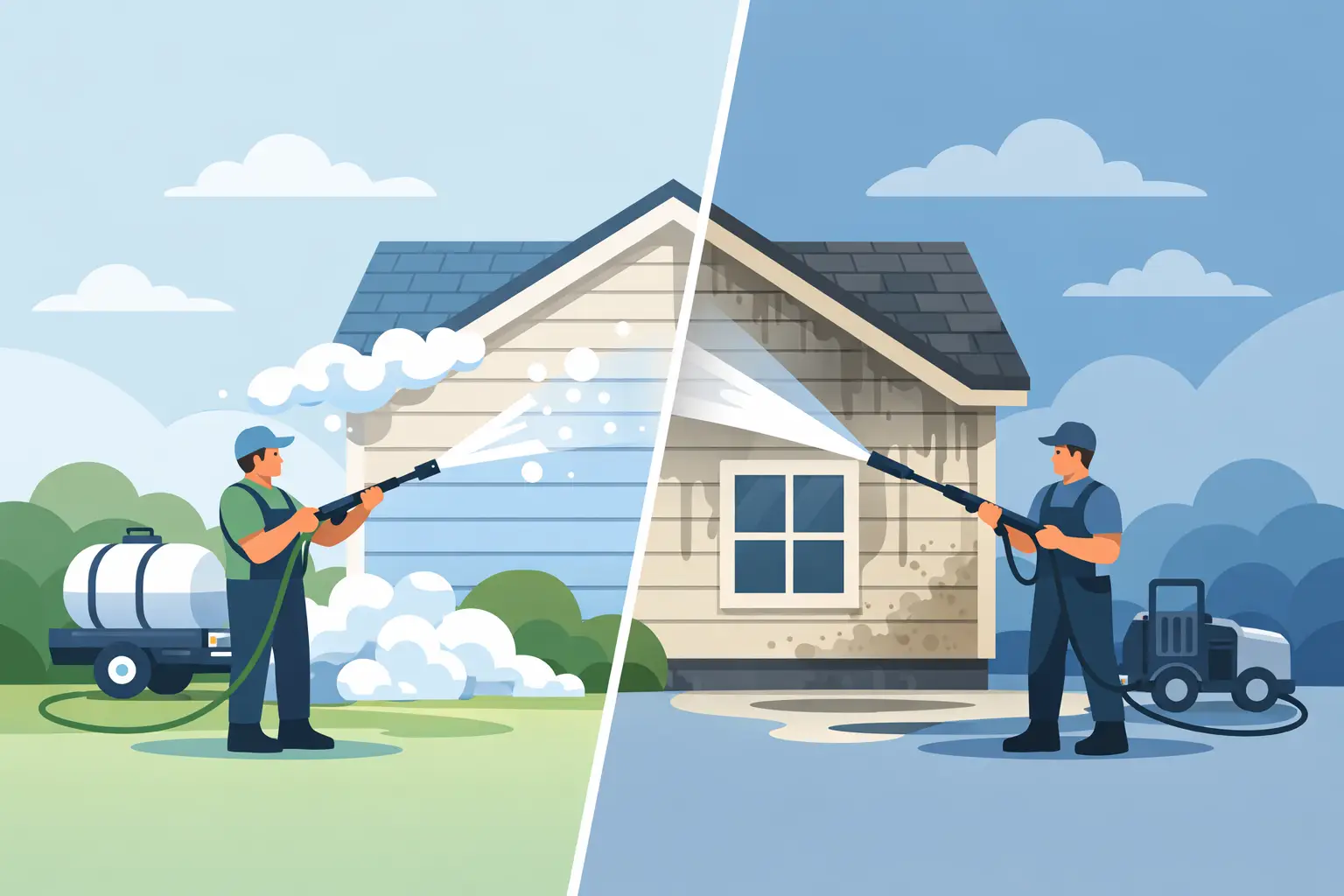
Soft washing uses low-pressure water combined with surface-appropriate cleaning solutions to treat and remove organic growth such as algae, mildew, moss, and lichen. The cleaning solution does much of the work. After it has time to break down the growth, the surface is rinsed at low pressure.
Pressure washing relies more heavily on the force of water. It uses a stronger stream to lift embedded dirt, mud, tire marks, loose debris, and surface stains from durable materials. On the right surface, it is an efficient way to restore concrete, brick, and certain other hardscape areas.
The distinction matters because “more pressure” does not always mean “cleaner.” A roof covered in algae may look like a good candidate for a strong wash, but high pressure can remove protective granules from asphalt shingles or damage the shingles themselves. A stained concrete driveway, on the other hand, often needs more mechanical cleaning power than a soft wash alone can provide.
When Soft Washing Is the Better Choice
Soft washing is generally the safer choice for delicate exterior materials and surfaces affected by biological growth. In the Charleston area, that often includes house siding, roofs, painted trim, screened porches, fences, and many decks.
House Siding and Painted Exteriors
Vinyl siding, painted wood, stucco, Hardie board, and similar exterior finishes can collect a stubborn layer of pollen, algae, mildew, and road dust. High pressure may leave visible marks, loosen paint, or drive water into cracks, vents, and seams. Soft washing removes the buildup without treating the siding like a concrete slab.
A professional soft wash is especially useful where algae has developed on the north or shaded side of a home. Simply rinsing that area may improve its appearance for a short time, but treating the organic growth helps deliver a cleaner, more even result.
Roof Cleaning
Roof cleaning is one of the clearest examples of why surface-specific methods matter. Black streaks on asphalt shingles are often caused by algae, while moss and lichen can take hold in shaded, moisture-prone areas. These issues should be addressed with a low-pressure roof-cleaning process, not standard pressure washing.
High pressure can shorten the service life of shingles, disturb their protective surface, and create unnecessary repair concerns. Soft washing treats the growth while protecting the roof material. Results may not always appear instantly, particularly with heavier lichen or moss, because some material releases gradually after treatment. That is normal and preferable to aggressive washing that risks roof damage.
Wood Decks, Fences, and Porches
Wood needs a careful hand. Too much pressure can raise the grain, create fuzzy fibers, leave wand marks, or carve into softer boards. A controlled soft wash can remove mildew and surface grime from weathered wood before deck staining or other finishing work.
Some wood surfaces do require limited pressure as part of the cleaning process, but it must be adjusted for the species, age, condition, and existing coating. A worn deck with loose boards, peeling stain, or visible cracking should be evaluated before cleaning starts. Cleaning can improve the surface, but it cannot replace needed repairs or solve rot below the surface.
When Pressure Washing Makes Sense
Pressure washing is valuable when a durable surface needs force to remove compacted dirt and heavy staining. The key is matching the pressure level, nozzle, and technique to the material instead of using one setting for every job.
Driveways, Walkways, and Concrete Patios
Concrete is built to handle more pressure than siding or shingles. Driveways and sidewalks commonly develop dark tire marks, red clay residue, algae, mildew, leaf tannins, and embedded grime. These stains can make an otherwise maintained property look neglected and create slick areas after rain.
Professional pressure washing can restore a brighter, more uniform appearance to concrete. For the best result, the process may include pretreatment for organic staining or other contaminants, followed by controlled surface cleaning. This prevents the uneven stripes that often appear when a pressure washer wand is moved by hand across a large driveway.
Not every concrete stain will disappear completely. Rust, oil, paint, hard-water deposits, and deeply set discoloration may need specialty treatment, and some stains can permanently alter the concrete. A straightforward inspection helps set the right expectation before work begins.
Brick, Pavers, and Other Hard Surfaces
Brick and pavers can often benefit from pressure washing, particularly where dirt has settled into textured surfaces. However, they are not automatically high-pressure surfaces. Older brick, loose mortar, damaged pavers, and unstable joint sand may need a more conservative approach.
Pressure can also expose existing weaknesses. If mortar is already failing or a paver patio has shifting areas, cleaning will not cause the underlying condition, but it may make it more noticeable. That is why an experienced contractor checks the surface before selecting a method.
The Real Decision Is About Material and Condition
Homeowners sometimes ask for “pressure washing” when what they really need is exterior cleaning. That is understandable because the term is widely used, but the service should be based on the property rather than the label.
A good cleaning plan accounts for the material, the stain, the age of the surface, nearby landscaping, drainage, and prior damage. It also considers whether the goal is immediate curb appeal, ongoing maintenance, preparing a home for sale, or getting a deck ready for staining.
For example, a property may need soft washing for the home exterior and roof, pressure washing for the driveway and walkways, gutter cleaning to remove debris, and deck preparation before a new protective finish. Treating those tasks as one exterior-maintenance plan saves the homeowner from guessing which method fits each area.
Why DIY Equipment Can Create Expensive Problems
Renting or buying a pressure washer can seem like a quick weekend solution. For a small, durable concrete area, it may be manageable. The risk increases when the equipment is used on siding, roofs, wood, windows, or older exterior finishes.
Pressure-washing damage is often immediate: etched concrete, stripped paint, gouged wood, torn screens, or broken seals around windows. Other problems may be less obvious at first, such as water pushed behind siding or into vulnerable gaps. Chemical use also requires care. The wrong mixture, application, or runoff control can harm plants and leave uneven results.
Professional cleaning is not just about having a stronger machine. It means controlling water pressure, using appropriate solutions, protecting surrounding areas, and knowing when a surface should not be washed aggressively at all.
How Often Should Charleston Homes Be Cleaned?
There is no fixed schedule for every property. Homes under heavy tree cover or near marshes and waterways may develop algae faster than homes with full sun and open airflow. Many Charleston-area homeowners benefit from annual exterior cleaning, while roofs and other surfaces may follow a different schedule based on visible buildup and condition.
Waiting until growth is thick and staining is severe can make cleaning more difficult. Regular maintenance is usually easier on exterior materials and helps preserve the well-kept appearance that matters for homeowners, landlords, and sellers.
If you are unsure whether your siding, roof, driveway, or deck needs soft washing or pressure washing, start with a surface evaluation rather than a one-size-fits-all service. First Response Exterior Cleaning LLC provides free estimates for Charleston-area property owners and recommends the method that fits the surface.
A clean exterior should not come at the cost of damaged shingles, scarred wood, or compromised siding. Choose the process that protects the material first, then enjoy the curb appeal that follows.