


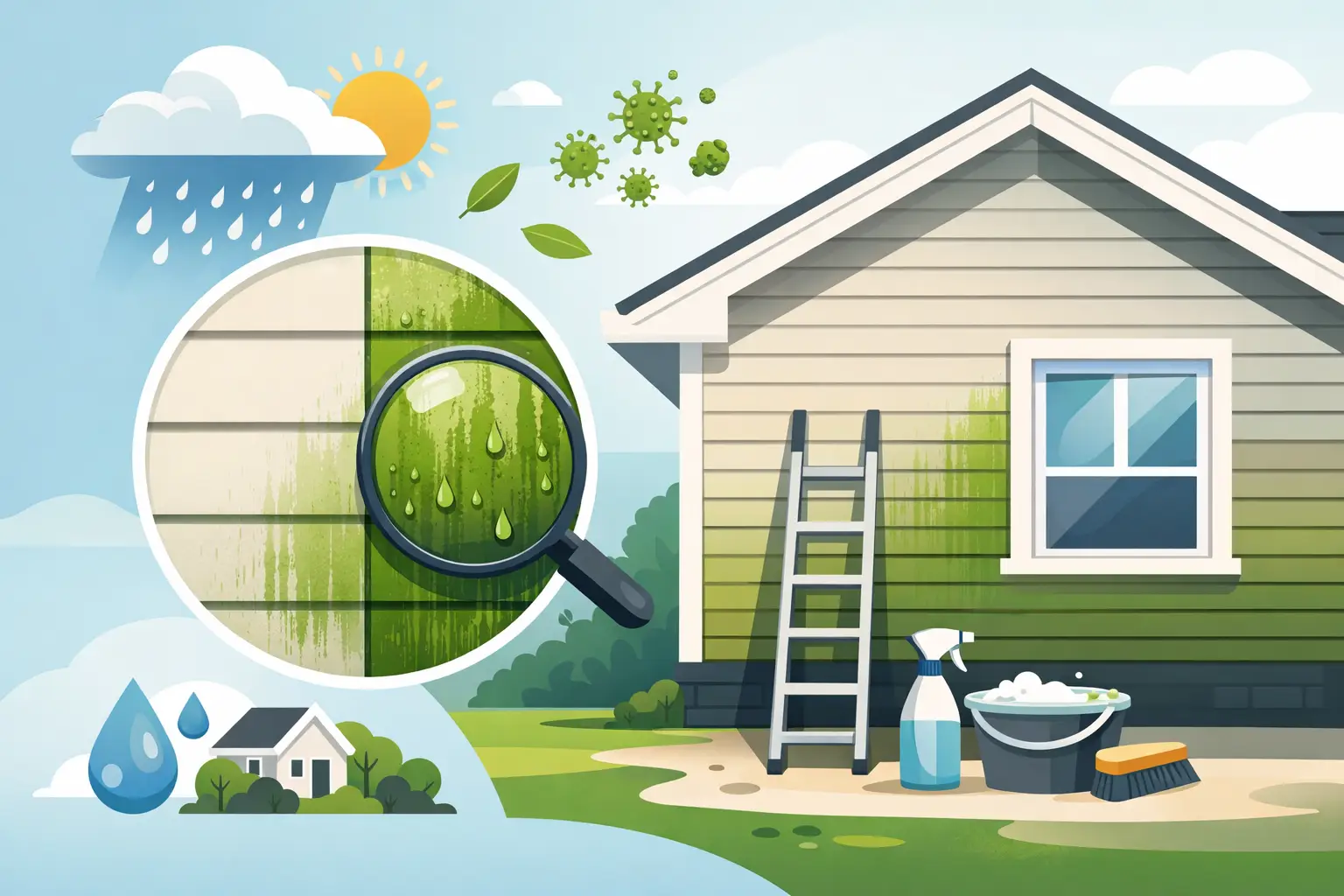
A green film on your siding can make an otherwise well-kept Charleston home look damp, neglected, and older than it is. If you are asking, “why does siding turn green,” the usual answer is organic growth, most often algae feeding on moisture, shade, and surface debris. It is common in our coastal climate, but it is not something you have to accept as permanent.
Why Does Siding Turn Green in Charleston?
Charleston homes deal with heat, humidity, frequent rain, coastal moisture, and long growing seasons. Those conditions allow algae to form on siding, especially where water takes longer to dry. It may begin as a light green haze, then become darker or streakier as it spreads.
Algae does not need a dramatic leak or major maintenance failure to appear. A shaded wall after a rainy week can stay damp long enough for growth to take hold. Airborne dirt, pollen, dust, and organic residue also collect on siding and give algae something to cling to.
The north-facing and east-facing sides of a house often show green growth first because they receive less direct afternoon sun. Areas beneath trees, beside dense landscaping, under roof overhangs, and near downspouts are also common trouble spots. Vinyl siding, painted wood, fiber cement, stucco, and other exterior materials can all develop algae when conditions are right.
Green Siding Is Usually Algae, but Not Always
Most green discoloration is algae, particularly when it looks like a thin film, patchy spotting, or vertical streaking. Homeowners sometimes call all exterior growth mildew or mold, but the terms are not always interchangeable. Mildew is often used as a general name for surface growth, while mold may appear darker, thicker, or black in color.
A few other issues can create a greenish appearance. Pollen can leave a yellow-green coating during certain times of year, though it usually rinses away more easily than established algae. Green or blue-green staining near gutters, metal flashing, or copper features may come from metal runoff rather than organic growth. If the discoloration is limited to one small area, it is worth looking for a dripping gutter, leaking hose connection, or sprinkler that repeatedly wets the wall.
The cause matters because cleaning the siding without correcting a constant moisture source may only provide a short-term result.
Why Algae Keeps Returning to Exterior Walls
Algae returns when the environment that caused it remains in place. That does not mean your home is dirty or poorly cared for. It means the surface is repeatedly exposed to the combination algae needs: moisture, shade, and residue.
Overgrown shrubs can restrict airflow along the wall. Tree limbs can keep sections of siding shaded throughout the day while dropping leaves and debris onto the roof and gutters. Clogged gutters may overflow against fascia and siding, and downspouts that discharge too close to the house can leave nearby walls wet. Even a sprinkler aimed at the house can create the same pattern over time.
Coastal humidity adds another factor. In Charleston, a wall does not always need visible rain to stay damp. Morning dew, humid evenings, and limited sun exposure can keep siding moist longer than homeowners expect.
Is Green Growth Bad for Your Siding?
A small amount of algae is usually more of a curb-appeal concern than an immediate structural emergency. Still, letting it build up is not a good maintenance plan. The growth holds moisture against the surface and can make siding look permanently stained if it is ignored for too long.
On painted wood or older exterior finishes, repeated moisture and organic buildup can contribute to peeling paint, dull color, and premature finish wear. It can also hide other problems, such as cracked caulk, deteriorated trim, or water running where it should not. On walkways, steps, and porches, similar algae growth creates a slippery surface that deserves prompt attention.
If you are preparing to sell a home, green siding can also affect first impressions. A clean exterior makes the property look cared for before a buyer reaches the front door.
How to Remove Green Algae From Siding Safely
The goal is to kill and rinse away organic growth without forcing water behind the siding, damaging paint, or leaving streaks. That is why the cleaning method should match the surface.
For light buildup, a homeowner may be able to rinse accessible areas using a garden hose and a siding-safe cleaner. Work from a stable position, protect nearby plants, and follow the cleaner label carefully. Avoid scrubbing aggressively with abrasive pads, which can scratch vinyl and remove paint from wood or fiber cement.
Established algae, upper-story walls, delicate siding, and heavily stained areas are better handled with professional soft washing. Soft washing uses surface-appropriate cleaning solutions and low-pressure application to treat organic growth at its source. The siding is then thoroughly rinsed without the force associated with traditional high-pressure washing.
High pressure is not automatically better. Used too close or at the wrong angle, it can drive water behind vinyl panels, damage seals, strip paint, scar soft wood, or force moisture into openings around windows and trim. A clean wall is not a successful result if the cleaning process creates a water-intrusion problem.
At First Response Exterior Cleaning LLC, exterior soft washing is selected for siding because it addresses algae, mildew, and surface grime while treating the home with the care it needs. A professional assessment also helps identify whether gutter overflow, tree cover, or drainage is contributing to the problem.
How Often Should Siding Be Cleaned?
There is no single schedule for every property. A sunny home with open airflow may only need exterior cleaning every 18 to 24 months. A heavily shaded property near mature trees, marsh areas, or frequent irrigation may need attention annually.
Rather than waiting until the siding looks fully green, watch for early signs such as faint spots near the bottom of walls, streaks below gutters, or dull-looking sections on the shaded side of the house. Removing growth early is easier and helps maintain a more consistent appearance.
A seasonal exterior check is useful. Look at gutters after leaf drop, make sure downspouts move water away from the foundation, and walk around the house after a hard rain. You may notice water patterns that are not obvious on a dry day.
Preventing Green Siding From Coming Back
You cannot remove Charleston humidity, but you can reduce the conditions that encourage algae. Trim shrubs and tree limbs back from the house so air and sunlight can reach the siding. Keep mulch, leaves, and soil from building up against lower walls, and make sure sprinklers are not regularly spraying the exterior.
Keep gutters and downspouts clear so rainwater does not overflow onto siding or trim. If one wall stays wet because of a drainage issue, correcting that issue can make a noticeable difference in how quickly algae returns. Regular soft washing is the final part of the plan because it removes the organic residue before it becomes a larger visible problem.
When It Is Time to Call a Professional
Call for help when the growth covers large areas, returns quickly, reaches upper stories, or appears alongside peeling paint, damaged caulk, overflowing gutters, or visible water staining. Those clues may point to a cleaning need, a moisture issue, or both.
A free estimate gives you a clear starting point without guessing at the safest method. The right cleaning approach can restore the siding’s appearance, protect nearby landscaping, and help you see the condition of the exterior more clearly.
Green siding is often a routine coastal-maintenance issue, not a reason to panic. Address it before the film becomes heavy, check the moisture conditions around the wall, and your home will be easier to keep clean through Charleston’s next humid season.